Arizona is a desert, and that is exactly why flooding is a real risk here rather than a theoretical one.
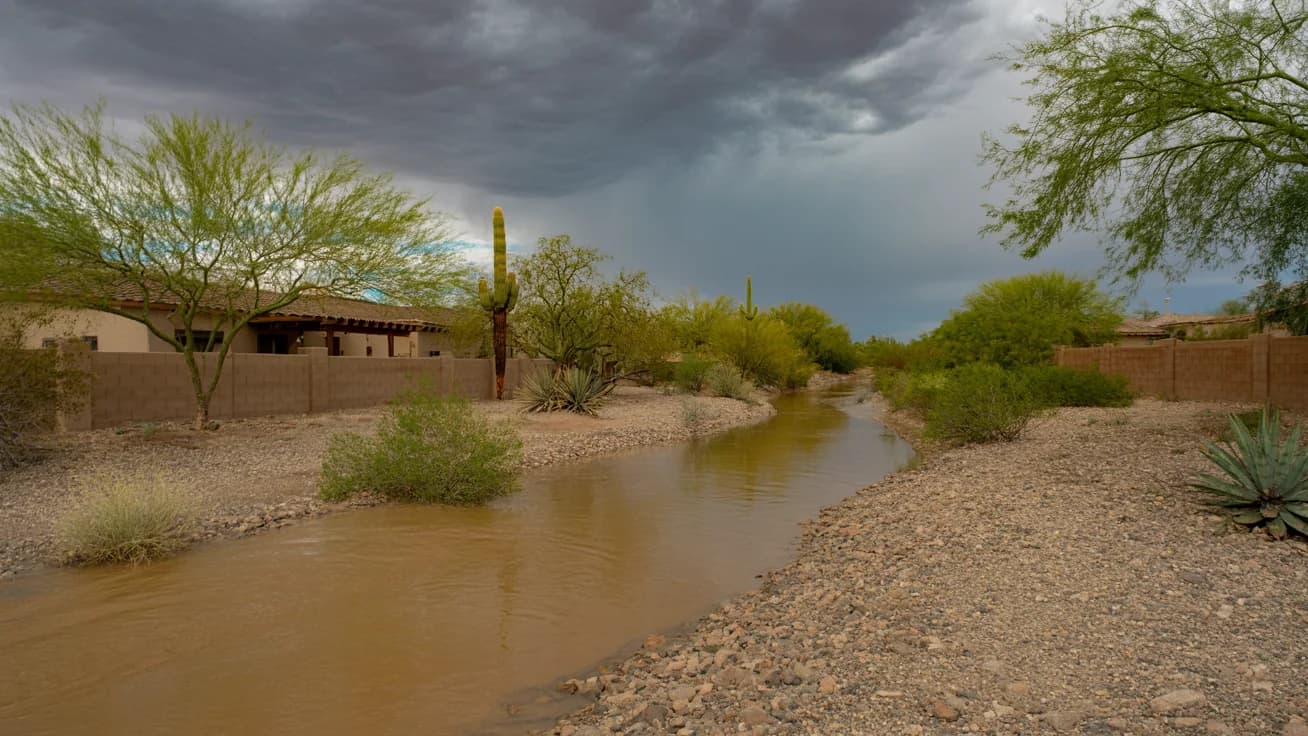
Hard, sun-baked desert soil does not absorb a sudden downpour. It sheds it. A monsoon cell can drop a large volume of rain in under an hour, and that water moves across the surface — down washes, along streets, into low-lying garages and living rooms — rather than soaking in. Phoenix-area neighbourhoods that have never seen water inside a house can flood from a storm that stalled two miles away.
And every standard homeowners policy in the country excludes it.
Why your homeowners policy will not pay
Flood is a named exclusion on standard property policies. This is not fine print your carrier is hiding — it is a structural feature of how property insurance is written, and it applies to every carrier.
The distinction that matters at claim time is how the water reached your home:
- Rain driven through a roof that monsoon winds damaged, or through a window the storm broke — that is generally covered by your homeowners policy. The water got in because of a covered peril.
- Water that rose or flowed across the ground and entered the structure — that is flood, and it is excluded, regardless of what caused the storm.
One monsoon can produce both in the same house. Adjusters make that distinction, and it decides whether a claim is paid.
Who actually needs flood coverage in Arizona?
If you have a mortgage and your property sits in a FEMA high-risk flood zone, your lender will require it. That requirement is the floor, not the answer to whether you need it.
Consider it seriously if any of the following describe your property:
- You are near a wash, arroyo or retention basin — these are engineered to carry storm water, and they do
- Your home sits at the low point of a street, a cul-de-sac or a sloping lot
- You have a basement or a below-grade garage — rare in Arizona but a significant exposure where it exists
- You are downhill from new construction or recent grading, which changes how water moves across the area
- Your neighbourhood has flooded before, even if your own house did not
A substantial share of flood claims nationally come from properties outside designated high-risk zones. "Not in a flood zone" means "not federally required to buy it" — it does not mean the water knows where the line is.
What a flood policy covers
Flood coverage is written in two separate parts, and this is where people get caught:
Building coverage protects the structure — foundation, walls, electrical and plumbing systems, HVAC, water heaters, built-in appliances, permanently installed cabinetry and flooring.
Contents coverage protects your belongings — furniture, clothing, electronics, and portable appliances.
They are elected separately. It is entirely possible to buy building coverage, flood, and discover your furniture and electronics were never covered. If you are buying flood insurance, buy both parts unless you have a specific reason not to.
Note also that flood policies commonly reimburse contents at actual cash value — depreciated value, not replacement cost — even when your homeowners policy uses replacement cost. That is a meaningful difference on a house full of belongings.
The 30-day waiting period
Flood policies typically do not take effect for 30 days after purchase.
This is deliberate, and it is the single most important practical fact about flood insurance: you cannot buy it when a storm is in the forecast. Arizona's monsoon season generally runs from June through September, which means the decision has to be made in spring — or, realistically, whenever you happen to be reading about it rather than watching it.
If the idea of flood coverage has been sitting on your list, the waiting period is the reason to move it up.
How this fits with the rest of your coverage
Flood sits alongside your other policies rather than replacing anything:
- Your homeowners insurance handles wind, hail and rain damage from the same storms, plus liability and loss of use
- A separate flood policy handles ground water
- An umbrella policy sits above your liability limits, not your property limits — it does not fill a flood gap
Boone Insurance Group places flood coverage alongside home and auto policies, and we can look at whether your specific property and location justify it. As an independent agency we compare options rather than quoting a single carrier.
If you want a straight answer on whether flood coverage makes sense for your address — and what it would cost — call (480) 508-1346 or request a free quote. Just do it before the season, not during it.